
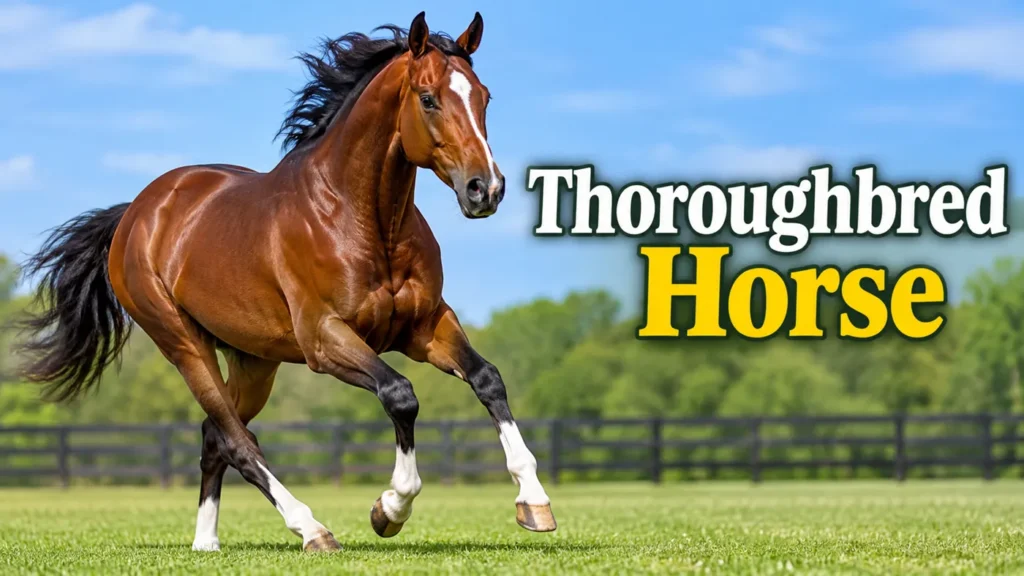
The Thoroughbred is one of the most well-known and influential of all horse breeds, of course famous for its speed, athleticism and stamina. It was developed in England for the purposes of racing and is now one of the most important breeds in the international equestrian world. Its lean build, powerful muscles, long legs and energetic disposition make it ideally suited to racing and other forms of competitive equestrianism.
Over the centuries, the Thoroughbred has become a popular horse not just as a racehorse but as a sport horse and a breeding animal. Their physical prowess and the well-documented bloodlines have made them a very important part of modern-day breeding and equestrian sports.
Origin and History of the Thoroughbred Horse
The Thoroughbred breed originated in England in the latter part of the 17th and early 18th centuries. Its development was inextricably linked with the rise in popularity of horse racing amongst the British gentry and royalty.
The breed was developed by crossing imported stallions from the Middle East and the adjacent areas with local British mares. Three foundation stallions were of particular importance in the development of the modern Thoroughbred:
- Darley Arabian: Imported into England in the early 18th century by Thomas Darley.
- Godolphin Arabian: A foundation stallion of Lord Godolphin’s and an important sire in the early days of Thoroughbred breeding.
- Byerly Turk: A stallion brought to Britain by Captain Robert Byerley.
Their descendants made a major contribution to the development of the breed’s speed, strength, and athleticism.
The publication of the General Stud Book in 1791 helped establish organized pedigree records and maintain the identity of Thoroughbred horses. Over time, the breed spread across Europe, North America, Australia, and other parts of the world, becoming closely associated with professional horse racing.
Physical Characteristics of Thoroughbred Horses
Thoroughbreds have that very distinct athletic look which is the result of their being bred and developed for speed and performance.
Body Structure
They’re generally a lean, muscular build with a deep chest, sloping shoulders, strong hindquarters, and a fairly short back. That’s the kind of conformation that lends itself to powerful movement and good running ability.
Height and Weight
The vast majority of Thoroughbreds are 15 to 17 hands, of course with individual variation. They’re typically in the 450 to 550kg bracket in terms of weight.
Head and Neck
They tend to have a refined head, expressive eyes, a straight or slightly convex facial profile, and a long muscular neck. Their facial features are very well defined and contribute to their overall elegance.
Legs and Hooves
Thoroughbreds have long, strong legs with well-developed joints and tendons. Their legs are particularly important for supporting the speed and movement required during racing.
Coat Colours
- Bay
- Chestnut
- Brown
- Black
- Grey
- Roan
Bay and chestnut are among the commonly seen colors in this breed.
Temperament and Behavior
Thoroughbred horses are known for their intelligence, energy, alertness, and competitive nature. Since they have been selectively bred for athletic performance, they generally possess high energy levels and require regular exercise and mental stimulation.
They can form very strong bonds with their handlers and are generally quite trainable with a consistent, patient approach. Some Thoroughbreds, however, can be sensitive or very reactive, especially in new environments.
Their temperament is different from individual to individual and will be a product of their genetics, their training, how they’ve been handled, and the conditions in which they live. The more experienced the horseman, the better placed he will be to manage their energetic disposition.
Racing Abilities and Performance
Horse racing is the main thing associated with Thoroughbreds. They’re the ultimate racers in every sense of the word, with speed, stamina, strength, and aerobic capacity in abundance.
They participate in different types of races, including:
Flat Racing
Flat racing takes place on a level track without obstacles. Thoroughbreds are particularly famous for this discipline because of their ability to achieve high speeds over different racing distances.
Steeplechasing
Steeplechasing involves racing over a course containing obstacles such as fences and ditches. It requires speed, stamina, coordination, and jumping ability.
Endurance and Long-Distance Racing
Some Thoroughbreds are entered in longer-distance events where stamina, conditioning, and the ability to manage energy efficiently are all important. Their athleticism has also seen them used in a number of equestrian disciplines other than professional racing.
Major Uses of Thoroughbred Horses
Although they were originally bred for racing, they are certainly versatile animals and have a number of other uses.
Professional Horse Racing
Thoroughbreds are widely used in professional flat racing and jump racing competitions. Famous international events such as the Kentucky Derby, Epsom Derby, and Prix de l’Arc de Triomphe have helped establish the breed’s global reputation.
Show Jumping
Their athleticism and jumping ability do mean that some Thoroughbreds are quite suitable for show jumping, where the horse has to jump over a series of obstacles in a show jumping course.
Eventing
Thoroughbreds are very commonly used in eventing (dressage, cross-country, and show jumping).
Polo and Recreational Riding
Some Thoroughbreds are used for polo, general riding, and recreational riding (depending on their temperament and training).
Breeding Programs
Thoroughbreds are used extensively in selective breeding programs to improve speed, athleticism and performance in other horse populations.
Retraining After Racing
Many ex-racehorses go on to have a completely different career via retraining. With the right assessment and training, they can become riding horses, sport horses, or just plain companions.
Feeding and Nutrition Requirements
Proper nutrition is essential for maintaining the health, muscle development, stamina, and performance of Thoroughbred horses.
Their diet should primarily consist of good-quality forage, including fresh grass and hay. Depending on their activity level, age, body condition, and nutritional needs, additional feed may be required.
Important dietary components include:
- Quality Forage: Supplies the essential fiber and promotes gut health.
- Concentrated Feed: Grains and specialist horse feeds can be used to provide extra energy when required.
- Protein: For muscle growth and tissue repair.
- Vitamins and Minerals: help to maintain bone strength, muscle function and general health.
- Fresh Water: It’s vital to ensure that horses involved in heavy exercise and racing are well hydrated.
Feeding programs should be adjusted according to the horse’s workload and body condition, preferably with guidance from an equine nutrition specialist.
Care and Management of Thoroughbred Horses
Thoroughbreds require proper management because of their energetic nature and athletic demands.
Regular Exercise and Conditioning
Daily exercise and structured conditioning will maintain muscle strength, cardiovascular fitness and flexibility. The level of training should be appropriate for the horse’s age and condition.
Grooming and Hygiene
Regular grooming helps maintain a healthy coat and allows handlers to identify injuries, skin problems, or other abnormalities.
Hoof Maintenance
Frequent hoof inspections, regular trimming, and appropriate shoeing are important for preventing lameness and maintaining sound movement.
Veterinary Care
Routine vet visits, vaccinations, dental care and parasite control are all essential for good health.
Comfortable Housing
Thoroughbreds should have access to clean, well-ventilated stables, good bedding, and sufficient space for movement and lying down.
Injury Prevention
As Thoroughbreds are so often involved in high-intensity work, a well-structured training regime with appropriate recovery periods and regular health checks are all essential to minimize the risk of injury.
Common Health Concerns in Thoroughbred Horses
Like other athletic horse breeds, they can be prone to health problems relating to their activity levels and their individual genetic make-up.
Some commonly recognized concerns include:
- Tendon Injuries: Repeated high impact exercise can put stress on the tendons.
- Joint Problems: Intense athletic activity can lead to joint stress and some forms of arthritis.
- Gastric Ulcers: Stress, intensive exercise, and feeding practices can increase the risk of equine gastric ulcer syndrome.
- Respiratory: Some horses will have respiratory issues, which will have an effect on their performance.
- Hoof Problems: Poor hoof balance, injury, and incorrect shoeing can all lead to lameness.
Preventive healthcare, appropriate exercise, balanced nutrition, and regular veterinary monitoring are important for reducing these risks.
Importance of Thoroughbred Horses in the Global Equine Industry
Thoroughbred horses have a major influence on the international equine industry. Professional horse racing generates economic activity through breeding farms, training facilities, racing events, veterinary services, transportation, and equestrian businesses.
The breed is also important in genetic improvement programs because its athletic characteristics have influenced the development of several sport horse populations.
Furthermore, Thoroughbred racing has contributed to the growth of equestrian tourism, sporting events, and specialized horse breeding industries across different countries.
FAQs about Thoroughbred Horse
The Thoroughbred is a very special breed indeed, famed for its speed, athleticism, stamina, and, of course, its role in the history of professional horse racing. It’s an English breed, having been developed over many generations through selective breeding, and is by far the most influential of the horse breeds.
Although it’s still primarily a racehorse, the Thoroughbred is capable of competing in a number of other disciplines. Like any good horse, it needs proper nutrition, good veterinary care, conditioning, and sensible training to stay fit and healthy.
With further advances in equine science, responsible breeding and post-racing retraining, the Thoroughbred will continue to have a role to play in the global equine industry.