
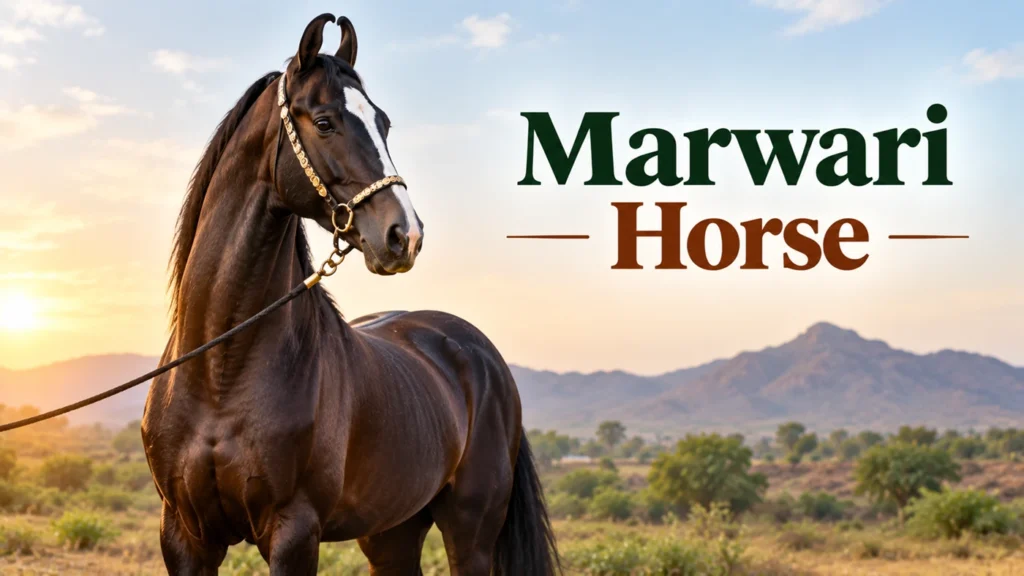
Marwari Horse
The Marwari horse is one of India’s most distinctive indigenous horse breeds, known for its elegant look, endurance, and characteristic inward-curving traits. Since it comes from the Marwar region of Rajasthan, the breed has always been connected with that area’s history, culture, and traditions and has established itself as an indigenous Indian horse breed.
Origin and History of the Marwari Horse
The Marwari horse is indigenous to the Marwar region of Rajasthan, more precisely to the area near Jodhpur and the neighboring districts. At that time, the breed was linked with the Rajput rulers and was appreciated for its endurance, loyalty, and capacity to deal with severe environmental conditions.
The Marwari horses were traditionally used by cavalry and were regarded as valuable for both transportation and warfare; their role later went beyond military applications, and they became linked with ceremonial functions, cultural events, and equestrian activities.
The breed experienced a decline in numbers during the modern period, but conservation efforts have helped maintain interest in the Marwari horse and its genetic heritage.
Physical Characteristics
One of the most recognizable features of the Marwari horse is its distinctive ears. The ears curve inward and may touch or nearly touch at the tips, giving the breed a unique appearance.
Marwari horses generally have a slender but strong body, long legs, a relatively narrow face, and a well-defined neck. Their coat can occur in several colors, including bay, chestnut, black, grey, and various other shades. Some horses may also have distinctive facial or body markings.
The breed is more famous for its agility and stamina than for its size alone. The physical traits of the breed have developed as a result of the environmental conditions and its traditional uses.
Care and Management
Even though the Marwari horse is well suited to India’s climate, it is still necessary to give it proper care for it to stay healthy and perform well. Owners must ensure that it has a balanced diet, enough clean drinking water, appropriate shelter, and routine veterinary check-ups. The kind of exercise given should be suitable according to the horse’s age, its health, and the amount of work it is doing. Regular grooming and care of the hooves can contribute to the horse’s general well-being. Especially when it comes to breeding horses, responsible management is important since sound breeding practices can help ensure the long-term conservation of the Marwari breed.
Adaptation to the Indian Climate
The Marwari horse is particularly associated with the hot and dry climate of Rajasthan. Indigenous breeds such as the Marwari have developed characteristics that allow them to cope with demanding environmental conditions.
In places where the temperature is high and the supplies of water and food may be limited, their ability to endure and to travel long distances has made them useful in former times. However, like all domestic animals, Marwari horses require proper nutrition, clean water, shelter, veterinary care, and responsible management.
Marwari Horses in Culture and Tourism
The Marwari horse still occupies a special position in the cultural identity of Rajasthan; its unique look and historical connection with royal customs have caused it to be a common sight at traditional ceremonies, fairs, and cultural events. In Rajasthan, horses are also shown at weddings and other celebrations wearing decorative equipment. This cultural role gives yet another reason for preserving the breed and keeping the knowledge of traditional horse-rearing methods.
Uses of the Marwari Horse
The traditional role of the Marwari horse was closely connected with transportation and cavalry. Today, its uses are considerably broader.
Marwari horses can be seen in ceremonial processions, cultural events, traditional weddings, and equestrian activities. They are also kept by horse enthusiasts and breeders interested in preserving indigenous breeds.
The breed’s distinctive appearance has also made it popular in cultural representations, exhibitions, and tourism-related activities in Rajasthan.
Importance of the Marwari Horse
The Marwari horse represents an important part of India’s indigenous animal heritage. Indigenous breeds can have cultural, historical, and genetic significance, making their conservation important beyond their immediate economic uses.
Contributing to the preservation of the Marwari breed also helps to maintain genetic diversity among horses. The long-term sustainability of the breed can be achieved through responsible breeding programs and proper animal-care practices.
Challenges in Conservation
The Marwari horse, although culturally significant, has encountered difficulties in terms of conservation because changes in transportation, the introduction of machinery, and the decline in the use of horses as part of traditional cavalry have all led to a reduced practical need for them.
Healthy breeding populations also depend on responsible breeding, sufficient veterinary care, and awareness on the part of owners and breeders. Conservation programs must therefore aim not just at increasing numbers but also at preserving the health and genetic quality of the breed.
FAQs about Marwari Horse
The Marwari horse is more than simply a separate breed of Indian horse; it has a history which is closely linked to the cultural traditions of Rajasthan, the regional practices concerning horses, and the country’s native animal heritage. Its typical curved ears, endurance, and adaptability are the reasons why the breed continues to attract interest from breeders, horse enthusiasts, and conservationists.
So long as breeding is carried out responsibly, sufficient attention is paid to animal welfare, and conservation measures are implemented, the Marwari horse will be able to remain an important part of India’s equine heritage for future generations.