
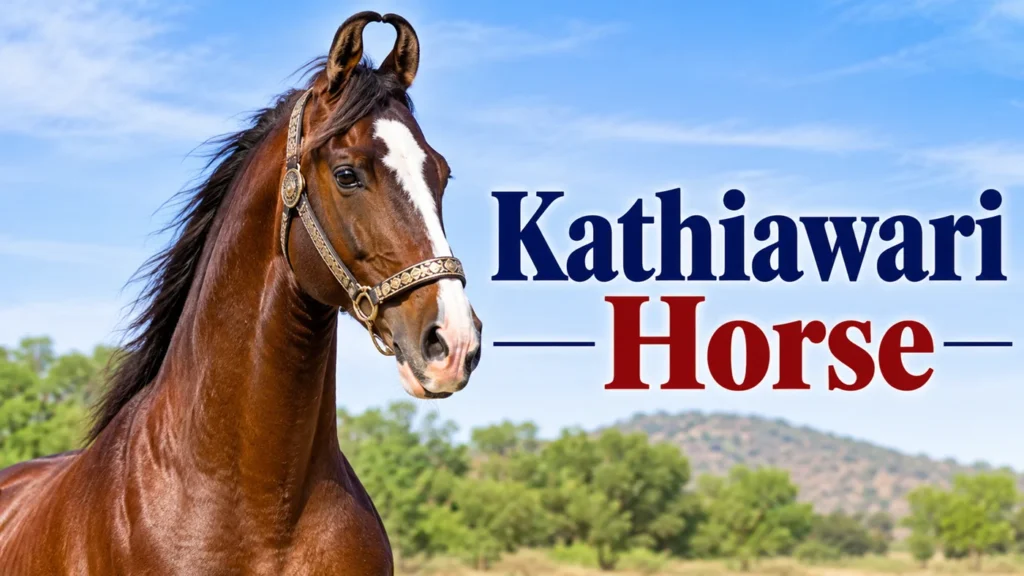
India has a number of indigenous horse breeds which are all known for their strength, endurance, adaptability, and historical importance. The Kathiawari is one such breed which is particularly notable for its appearance and its links to the royalty and culture of Gujarat. It’s a very strong-looking animal with inwardly curving ears, a solid build, and excellent stamina.
Originating in the Kathiawar region of Gujarat, the Kathiawari is a horse that has traditionally been used for transport, riding, and for the army. It is a tough animal, capable of coping with the harsh climate and of traveling long distances, and is thus an important part of India’s indigenous livestock. There are now efforts to conserve and promote the breed.
Origin and History of the Kathiawari Horse
The Kathiawari horse is from the Saurashtra region of Gujarat (Rajkot, Bhavnagar, Surendranagar, Junagadh and Amreli districts to be precise) and is named after the Kathiawar peninsula where it was developed over the years.
Historically, the horse was associated with the Kathi communities and Rajput rulers of the region. It was valued as a dependable riding and war horse because of its speed, courage, stamina, and ability to travel across dry and difficult terrain.
The breed is thought to have arisen through a mixture of the native horse populations and horses which were brought into the country via trade and other contacts. Its exact ancestry is not known, but it is definitely an indigenous Indian breed.
Over time, the Kathiawari horse became closely associated with Gujarat’s traditional culture, royal heritage, and equestrian activities.
Physical Characteristics of the Kathiawari Horse
The Kathiawari is easily identified by its face and its very compact, strong build.
Distinctive Curved Ears
One of the most striking features of the breed is its small, set-in ears. The tips of the ears may actually meet or nearly meet.
Facial Structure
Kathiawari horses generally have a concave or slightly dished facial profile, a broad forehead, large expressive eyes, and a relatively small muzzle. They have quite prominent and well-developed nostrils.
Body Structure
The breed has a compact body, short back, strong quarters, good muscled shoulders, and a well-developed neck. All of which gives it its strength, balance, and stamina.
Height and Appearance
The majority of Kathiawari horses are around 13.5 to 14.5 hands, though of course individual horses will vary. They have well-proportioned legs, strong hooves, and a very nice-looking animal.
Coat Colours
Common coat colors include:
- Chestnut
- Bay
- Grey
- Dun
- Brown
Some horses may also display distinctive coat patterns, although these are less common.
Temperament and Behavior
The Kathiawari horse is known for its intelligence, courage, alertness, and loyalty. It generally develops a strong relationship with its handler and can be responsive when properly trained.
These are energetic, active horses and very much suited to being ridden. They’re confident and tough enough to have been the horses of choice for long journeys in the past.
Like all horse breeds, their behavior is down to individual temperament, how they are handled, trained, and what their living conditions are. Consistent training and proper care are absolutely vital to having a well-behaved and healthy horse.
Major Uses of the Kathiawari Horse
The Kathiawari horse has served several purposes throughout Indian history and continues to be valued for different activities.
Riding and Transportation
Traditionally, the Kathiawari were used for riding and transport, and their stamina and ability to cope with all sorts of terrain made them ideal for that purpose.
Equestrian Sports
The breed is used in a variety of equestrian disciplines, including tent pegging, endurance riding, and other riding disciplines. It’s an extremely agile and energetic animal and is therefore well suited to physically demanding work.
Military and Historical Significance
Historically, Kathiawari horses were valued as war horses because of their speed, courage, and endurance. They played an important role in the transportation and military traditions of regional rulers.
Cultural and Traditional Events
Kathiawari horses are also part of Gujarat’s cultural heritage and are in demand at various cultural events such as traditional gatherings, horse shows, breed shows, and equestrian events.
Breeding and Conservation
Selective breeding programs are in place to maintain the unique physical characteristics and genetic identity of the Kathiawari. It is important to maintain healthy breeding populations as part of the effort to preserve indigenous horse diversity.
Feeding and Nutrition Requirements
Proper nutrition is essential for maintaining the strength, stamina, and overall health of Kathiawari horses.
Their diet should be based predominantly on good quality forage (fresh grass and hay). Depending on the individual animal’s age, body condition, level of activity, and specific nutritional requirements, additional feed will probably be required.
Important dietary components include:
- Green Fodder: Provides fiber and the necessary nutrients.
- Dry Fodder: Hay and other appropriate roughage will support digestive health.
- Concentrated Feed: Grains or formulated horse feed may be provided according to energy requirements.
- Minerals and Vitamins: For bone development, muscle function, and general health.
- Clean Drinking Water: It’s absolutely essential to have access to clean drinking water, particularly in hot weather and when you’re exercising.
A balanced feeding program should be prepared with guidance from a veterinarian or equine nutrition specialist.
Care and Management of Kathiawari Horses
Although the Kathiawari is a hardy, adaptable breed, it does need proper management if it is to be kept in good health and perform to its potential.
Regular Exercise
Daily movement and appropriate exercise will maintain muscle strength, cardiovascular fitness and a healthy body condition.
Grooming and Hygiene
Regular brushing will remove the dirt, loose hair and debris. It’s also important to clean the mane, tail and hooves.
Hoof Care
Routine hoof inspection and trimming by a properly qualified farrier will go a long way to preventing discomfort, injury, and hoof problems.
Veterinary Check-Ups
Regular vet checks, vaccinations, and worming as per the vet’s advice, all go a long way to protecting the horse against common ailments.
Proper Shelter
Horses should have access to clean, well-ventilated shelter that protects them from extreme weather, excessive heat, heavy rainfall, and other environmental conditions.
Training and Handling
Gentle handling, consistent training, and proper social interaction help develop confidence and positive behavior. Horses should always be handled by individuals familiar with equine behavior.
Conservation and Importance of the Kathiawari Horse
The conservation of indigenous horse breeds is essential for protecting India’s livestock biodiversity and traditional animal heritage.
Changes in agricultural practices, mechanized transportation, declining demand for traditional working horses, and uncontrolled crossbreeding have created challenges for maintaining purebred populations.
Conservation efforts include maintaining organized breeding programs, identifying suitable breeding animals, documenting breed characteristics, and encouraging responsible ownership.
The Indian Council of Agricultural Research (ICAR) and the National Bureau of Animal Genetic Resources (NBAGR) recognize the Kathiawari as an indigenous horse breed of Gujarat.
Promoting awareness among breeders, farmers, equestrian organizations, and animal enthusiasts can further support the preservation of this valuable breed.
FAQs about Kathiawari Horse
The Kathiawari horse is one of India’s distinctive indigenous horse breeds, admired for its unusual inward-curving ears, strong body structure, intelligence, and remarkable endurance. Its historical association with Gujarat’s royal traditions and its usefulness in riding and equestrian activities make it an important part of India’s cultural and livestock heritage.
Although the breed is naturally hardy, proper nutrition, veterinary care, responsible breeding, and good management are all still absolutely essential to the health of the animal.
Protecting the Kathiawari through scientific breeding and conservation will go a long way towards ensuring that its distinctive characteristics are maintained for the future.